The problem with Chalmers' way of thinking . . . (title edit)

Write please don’t resort to slander, I’ve learned plenty about the past 13.6 yrs, formation of matter, dust clouds, star and galactic formation, and demise, the boggling spectrum of varieties between stars, the generations of stars and how elements were formed and why there are such magnificent variety of properties among these atoms that are made up of the basic few ingredients, the discovery of complexity within the fabric of space and so on (depending on how deep you want to dig)

All that is deeper, deeper, deeper, deeper inside of us. Those are the folds within folds of constructive harmonic complexity changing as time races by - that I try to convey.

That’s why I keep hammering at “scale makes difference” then the notion gets ghosted, . . .

Right back at you.

This is about digging inside of our selves down to our humanity -
It’s not about digging down to the atomic realm to our fundamental constituents ! !

Try to appreciate that.

I’ve been looking at some articles over at Medium.com. Lots of grand ideas. Interesting place. Also gave me a chance to advance this dialogue.

How Physicalists Dismiss Consciousness

The hard problem and Anil Seth’s ‘real problem’

Lots of interesting notions, then the punchline:

But in any discussions on the nature of consciousness, it must be remembered that physicalism remains a speculative philosophical position rather than a conclusion resultant from unequi…

Physicalism remains speculative? Really? Think about what that implies. Are the formation of our universe and solar system mere philosophical positions? Is geology? Is biological evolution a philosophical position?

We don’t speak of those as if they were open metaphysical questions—yet when it comes to consciousness, suddenly we treat the physical as insufficient. Why?

Think about the framing: I keep reading “the brain” mentioned, as if the rest of the body weren’t an essential, integrated part of the whole.

Brain + Body + interacting with its interior and exterior’s physical reality = Human Mind. That’s what makes you, “you” - you’ll never find the “real you” buried in our brain neurons >> because it’s so much more than them.

Philosophers demand nature explain itself, yet they don’t bother to deeply study and learn to appreciate Evolution and what our natural heritage has to teach us.

Take a moment to reflect on what you actually are—your body, your blood, your cells. You, the person reading this, are the product of half a billion years of uninterrupted iterations—generations upon generations—each building upon what came before.

Furthermore your body carries interior knowledge and agendas, that your conscious mind is blind to without learning to appreciate the Physical Reality ~ Human Mind divide.

Earth bound life has relentlessly refined its capacity to observe, to process, to act. This is the story of your ancestry: it’s not just about genetics and neurons. It requires an evolutionary bottom up perspective, true appreciation that we are evolved biological beings, Earthlings, nothing more and nothing less. It took millions of generations to arrive at you.

Our consciousness is not some unfathomable mystery, it’s the interior echo of your body communicating with itself.

1 Like

Anil Seth agrees with physicalism. He drew a comparison with the original concept of “life” as a mysterious force (elan vital) possessed by biological entities, that was gradually replaced by “abiogenesis”, the gradual emergence of biochemical polymers and the ability to move and predation.

Did you see this guy?

Geologists, cosmologists, chemists, particle physicists and bacteriologists habitually treat the objects they study as mindless and lifeless matter, not as systems having a sentient inner life.

“A truly scientific explanation of consciousness is within our grasp; but we need a new scientific framework to reach it.”
(Robert Pepperell )

Yup, and I wonder why we make that so difficult to appreciate - oh yeah, that would force us right back to having to face our own self-absorption and self-serving nature. Pepperelll writes

“No current theory can explain the subjective nature of consciousness in a way that is consistent with the known principles of physics, chemistry and biology; no theory is at once practically testable, falsifiable and able to generate non-obvious predictions.”

"What’s the problem?

In a new book, I argue that we have so far failed to explain consciousness because we have overlooked something very simple. We have neglected the most basic and obvious feature of sentience, the one that we are most familiar with in our own mental lives.

We have ignored the fact — or more precisely, we have been unable to grasp the full implications of the fact — that sentience exists from the inside out. It exists, as I put it in the book, from the ‘intrinsic perspective’ of the thing that is conscious.

And why have we neglected, or been unable to grasp the implications of, this fact? Because of the way we habitually do science."

It’s an interesting read that harmonizes with some of the points I’m trying to get across.

Although I think Pepperell stumbles with this:

“It is the first framework to seriously explore the idea that all physical systems have intrinsic perspectives and to offer a way to study and explain conscious experience from first principles.”

Which was preceded by:

“… In fact, in most areas of physical science it is just assumed — without rationale or evidence — that physical systems like atoms, molecules, cells, apples, mountains and planets have no intrinsic perspective to study.”

I think rather than searching for a way to infuse everything with some quanta of “consciousness,” we ought spend more time absorbed the reality and implications of the divide between physical reality and our “mind” - that our physical body interacting with that physical reality produces.

I’m not sure that he is saying that everything is infused with “consciousness”. After that point, the grammar problems make this hard to follow. “absorbed the reality”? The body interacting with that reality produces the divide?

This one, too, leaves me with an unfilled gap. I don’t have a problem with anything you’re saying, but it’s not complete. An “interior echo” sounds pretty mysterious to me. Physicalism describes reality and could very well be all there is, but it doesn’t give us a description of consciousness that tells us if we are experiencing something that other living things are not. Same for statements like yours. A plant could have an interior echo that is communicating with itself, but is it conscious?

The sum total of the whole living biological being Body + Brain + interacting with interior and exterior = consciousness.

The other part of that is recognizing the full scope of our biological Evolution - The incessant drive for ever greater sensing, processing, manipulator command and control abilities.

Explain what’s missing?

It’s not mysterious, it’s semantics.
Consider the ever more complex and subtile interior bodily communications networks being uncovered (such as interstitial tissue).

That doesn’t make sense.
What is being expected.
How can we humans experience the same things other animals are appreciating, when we inhabit unique centers of reference to the world?

It’s what I mean by the unfathomable arrogance and hubris of humans - expecting nature to prove itself to our self-absorbed short-sighted human mind.

That’s why I believe it’s absolutely critical to appreciate we are evolved biological creatures, created by Earth’s processes. It helps one gain a bit of humility and perspective.

To me it seems, it ought to be self-evident that every living creature has an awareness ~ consciousness spectrum - each in accordance with its complexity and life style.

A) Is feels to like a silly distracting debate question.
That’s where the humility comes in - I’m fine with molecular communication as has been clearly demonstrated through various experiments. That’s plenty good for me. I don’t believe I need to be able to relate to every form of consciousness, in order to appreciate its validity.

B) Refer to the above comment.

Oh and I just realized I actually paraphrased that wrongly.
Dr. Solms writes,

“consciousness is the inside reflection of your body communicating with itself.”

This is why I am intrigued with David Bohm’s original concept of Holonomy.

It sounds very much like the Penrose-Hameroff concept of ORCH OR.

That doesn’t make it any less mysterious

And the reason I am totally unimpressed with such substrata “quantum consciousness” is because proponents conveniently ignore the scaling problem. Like the vast distance—between the quantum soup at the edge of matter and energy, with our biological realm—never connects.

Visualizing the Planck Length. Why is it the Smallest Length in the Universe? - Arvin Ash

Arvin Ash uses the analogy of a tree on Earth compared to the universe to help understand the Planck length, which is an incredibly small unit of length. Imagine magnifying an atom to the size of the observable universe. Under that same magnification, the Planck length would be roughly the size of a tree.

The other problem, does David Bohm or Penrose ever define “consciousness”? I’ve yet to come across it.

The material world is operated by “forces” - it’s only with the origin of biology that “choices” were introduced to the universe.

How does this:

Square with this:

If other animals, “inhabit unique centers of reference”, are they conscious like we are? Describe the spectrum. Primates and dolphins have some sense that other creatures are thinking, and some sense of past and present, but what about a worm? Where is the line of having a conscious or not, or what are the ends of spectrum?

That’s what I’m asking when you responded with, “what is being expected”. You are talking about consciousness without saying what it is. Instead you talk of hubris and “expecting nature to prove itself”, something I’m not expecting at all. You dismiss the question, saying it’s self-evident. This is more of a “panpsychism” argument, but you do it without evidence or a suggestion of what is to studied, other than contemplating evolution.

Sorry, in a rush so didn’t get past first sentence. Will get to rest later.

I don’t understand the question. A creature’s perception of the world is absolutely dependent upon that particular creatures suite of structure and needs.

What I mean is that every creature looking at that banana on the table will perceive that banana according to its sensory receptors and processing needs, etc.

It’s not about “reality” - it’s about our individual “perceptions” of reality.

Does any of that make sense?

Favorite saying of the day:

matter operates under forces - biology/evolution operate under choices.
Which is where consciousness comes in.

gotta smooth it out a little.

Yes it does. And it’s only the beginning of an inquiry into what consciousness is, how to identify it, find where it occurs, and understand us better so we don’t all kill each other.

Your problem is using terms like “reflection”. Reflection is the reception and cognition of patterns generated by “quantum fields”.

But we do not look at individual quantum particles, we look at fields that are the product of trillions of quanta being processed by the microtubule network in the body and being processed by the brain.

You need to change your perspective how we are able to observe reality to begin with.

Consciousness is being able to observe and experience reality as quantum fields. How else could you reduce and contain the enormous field patterns that form in reality inside a 3lb lump of fatty tissue of your brain?

That is where your “reflection” is being processed and “orchestrated via objective reduction” (ORCH OR).
Our perception of reality does not lie outside our brain. It is “consciously” reflected and experienced inside it.

Listen to Jacob Collier, where he assembles a bunch of non-professional people and
creates a living symphony, when he directs a thousand voices with some very simple instructions, which are cognized and processed in a most remarkable way at quantum wave level. He achieves “harmony” via assembly and reduction (orchestration) of several wave fields.

But no one does that. Were we conscious when we only knew about electromagnetism?

You don’t need to know that you are conscious to be cognitive of reality.
Most animals are keenly aware of their environment without contemplating their own relationship to their environment other than seeking safety and comfort.

Bacteria, some of the oldest living things on earth, talk to each other and act in concert via quorum sensing of numbers of chemical hormones.

All information sharing and communication starts at quantum level.
Run this informative clip:

Note the familiarity with microtubule pattern. Microtubules are “variable” potentiometers.

IMO, it all rests on a mathematical ability to react to “differential equations”, at the Planck level where the values of wave functions are superposed until they collapse into a single state.

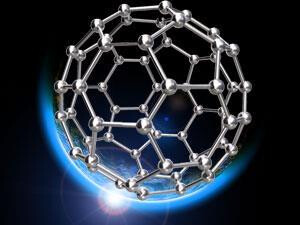
The Table of Elements is a perfect example of this process. Elements (atoms) with 6 protons are carbons and they self-organize into “buckyballs”. They don’t know this but this is how their complex polymer pattern self-organizes. Nothing conscious about that. Yet it is clearly semi-intelligent. It is “organized”!

There is a form of mathematical “cognition” that organizes the elements in accordance to strict mathematical laws that control the various physcal forces and their interactions.

Buckyballs grow by gobbling up carbon | Research | Chemistry …

(Buckyballs grow by gobbling up carbon | Research | Chemistry World)

Microtubules self-organize into hollow coil shaped polymers.

These configuration at fundamental levels allow for specific types of information transport and sharing.

There is nothing mysterious about it, other than it is too small to “measure” , but conscious measurement has nothing to do with quantum fields and wavefunction collapse.

What we observe is an unconscious natural intelligence doing its thing in accordance with mathematical restrictions and permissions.

Our ability to experience these natural mechanics is a result of evolution via natural selection of those patterns that offer the best adaptation and use of self-organizing in accordance with natural laws.

There are other organisms that are more advanced and better adapted to their own environment than humans. If you want to fly it is smart to grow wings rather than build them from aluminium. Insects learned to grow wings before there were birds.
Pretty smart, no? But self-conscious? I doubt it. It’s more “reactive” to external pressures.